The Restaurant Customer Journey: From First Discovery to a Return Visit
November 3, 2026
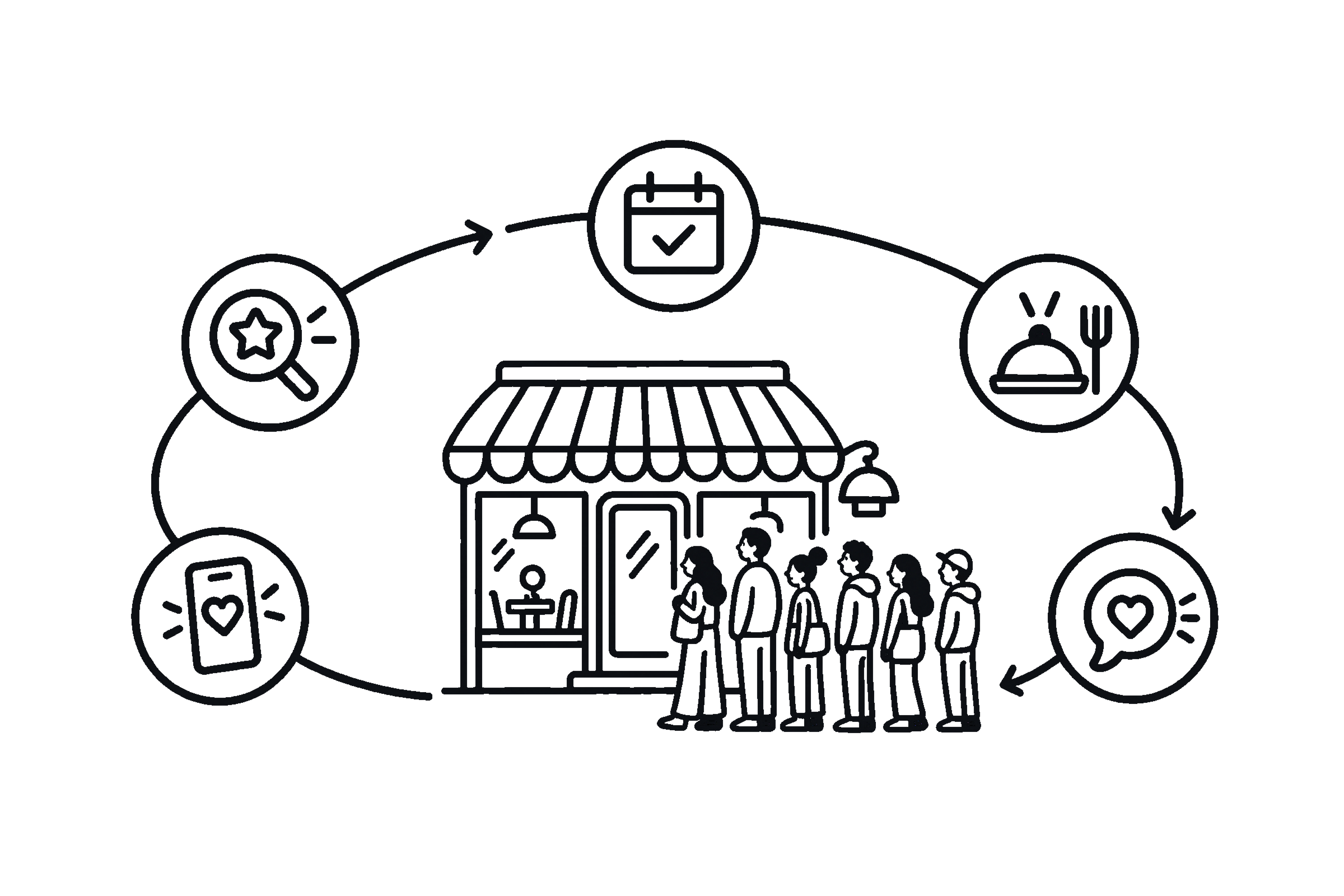
A restaurant visit can start long before someone walks through the door. A friend recommends a place, an Instagram post catches their attention, or a search on Google Maps or Yelp helps them decide where to eat.
Each route brings different questions: What’s on the menu? What does it cost? Is it right for the occasion? Can I get takeout?
Understanding the restaurant customer journey means looking at how people discover your business, choose it, experience it, and decide whether to return. The opportunity is to connect those steps while recognizing that what attracts a first visit may differ from what brings someone back.
7 Practical Ways to Improve Your Restaurant’s Customer Journey
1. Keep your hours, menus, and promotions consistent wherever customers find you.
A customer checking Google Maps or Yelp should find the same opening hours as someone visiting your website. An Instagram special should make its price and availability clear.
Check your website, Google Business Profile, Yelp listing, social profiles, and ordering platforms. Review prices, addresses, holiday hours, and menus. Google lets restaurant owners manage hours, menus, photos, and other business details through their Business Profile.
Assign someone to update these details whenever something changes. Accuracy needs an owner.
2. Help customers find your entrance, understand the menu, and decide what to order.
Look at your restaurant from the perspective of someone walking past. Can they tell what you serve, see the price range, and find the entrance? If people peek inside or study the menu and leave, observe where they hesitate. Leaving doesn’t tell you why, but it gives you something to investigate.
A readable menu near the entrance can help people decide whether to come in. Clear descriptions or a few representative food photos may make unfamiliar dishes easier to understand. Choose details that answer useful questions without crowding the display.
If your restaurant sits back from the street or inside a shopping center, an A-frame sign, where permitted, could help guide people toward you. Place it where someone needs direction, and make the message readable at a glance.
Carry that same clarity onto your website: customers should be able to understand the menu, find your location, and see how to order or book. Whether someone approaches on foot or through a screen, help them feel confident taking the next step.
3. Make sure your in-person experience matches what you advertise online.
Photos, menu descriptions, and promotions create expectations before customers arrive.
If your website promotes a relaxed neighborhood dinner, consider whether the greeting, music, seating, and pace of service support that experience. If you advertise quick pickup, make the collection point easy to identify.
Walk through the entrance as a first-time guest. Is it clear whether to wait, sit, or order? A friendly greeting and clear directions can help guests settle in.
4. Check your takeout packaging, food quality, and pickup experience.
For a pickup or delivery customer, the experience includes receiving the order, opening the containers, and discovering whether everything arrived correctly.
The National Restaurant Association’s 2025 off-premises research identifies food quality, temperature, and effective packaging as customer expectations.
Pack a typical order and inspect it after a realistic trip home. Check for spills, missing extras, and food that travels poorly. Let that test guide changes to containers, preparation, or the takeout menu.
5. Consider what makes your restaurant worth another trip.
Think about what could make another visit appealing and practical, such as a particular dish or weekend brunch served later into the afternoon to fit a more leisurely weekend schedule.
When a restaurant catches our attention, we may go out of our way to try it. But would we drive in rush hour traffic and wait in line again? Or would we save the next visit for when we’re nearby or have more time on the weekend?
A light snack within walking distance fits into a day differently from a meal that requires a larger commitment. One might become a regular stop, while the other is a visit customers plan ahead.
A financial district restaurant may be a regular weekday lunch spot, while visits outside work hours may depend on customers making a special trip. A busy mall or nearby anchor business can introduce visitors, while repeat visits may depend on their next shopping trip.
Customers can love your restaurant without visiting often. Someone who comes twice a year and recommends you to friends can still be a loyal customer.
6. Stay connected with customers after their visit.
Use channels your customers choose to follow, whether that’s social media, email, or text messages. A post about a weekend special can offer a timely reminder; a loyalty program may better suit someone’s regular coffee stop.
Give customers something relevant to come back for, such as a seasonal dish, a popular dish back on the menu, or an event worth planning around.
Choose an approach you can maintain, and make each update useful.
7. Fix one customer experience problem before spending more on marketing.
Choose a path relevant to your restaurant: walking past to ordering at the counter, Google Maps or Yelp to dine-in, or website to pickup.
Follow that path yourself. Read your Google and Yelp reviews, and ask staff what customers regularly mention. Look for recurring concerns, such as confusing ordering instructions, long pickup waits, or inconsistent service, then choose one specific problem to fix.
Choose one improvement and one relevant measure, such as fewer pickup complaints, more completed orders, or more repeat visits. Learn what helps before investing in another channel.
A great meal can give someone a reason to return. Whether another visit fits their routine is a separate question.
Your priorities will differ depending on whether you serve nearby workers, shoppers, neighborhood regulars, or guests making a special trip. Start with how people already reach you, then consider what would make their next visit practical and worthwhile.
Give customers an experience worth repeating, and understand what makes repeating it possible.
Looking for ways to bring more customers through the door and encourage return visits? Book a strategy call with Fully Reserved to discuss your restaurant’s goals, or explore our free tools for practical help with restaurant marketing and customer experience.